Introduction to Thistlex® Pro
|
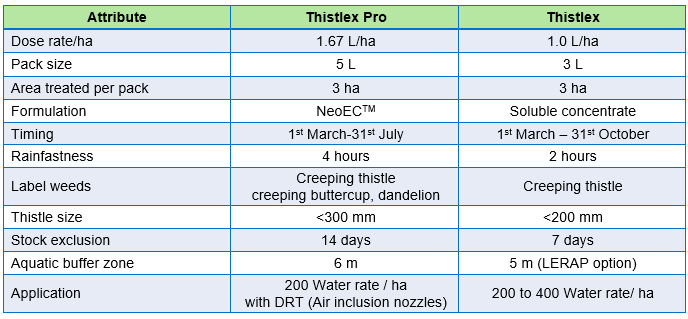
New for 2026, Thistlex® Pro, containing Arylex™ active, is a broad-spectrum replacement for Thistlex. It controls all species of thistles and buttercups as well as dandelions, hogweed and cow parsley. The label restricts use to grassland grazed by cattle or sheep only.
This is a novel NeoEC™ formulation so low odour and good storage stability. Note that the dose rate is 1.67 L/ha. It is supplied in a 5-litre pack which will treat 3ha.
|
|
Chickweed - the early season threat
|
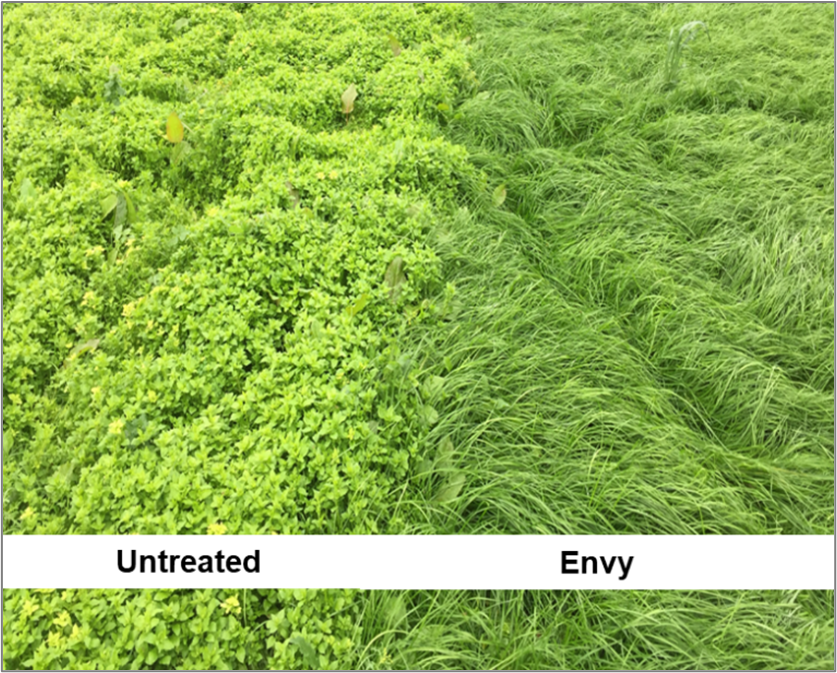
Chickweed has been growing actively in autumn-sown leys which didn’t receive a herbicide treatment. Where present, a treatment with Envy® at the 1.5 L/ha rate will be needed. Envy is the ideal product to use as it contains 2 active ingredients: fluroxypyr and florasulam, so it is very effective on both common chickweed and mouse-eared chickweed. Florasulam also works well in cooler conditions.
|
|
Drift reduction technology for spraying grassland
|
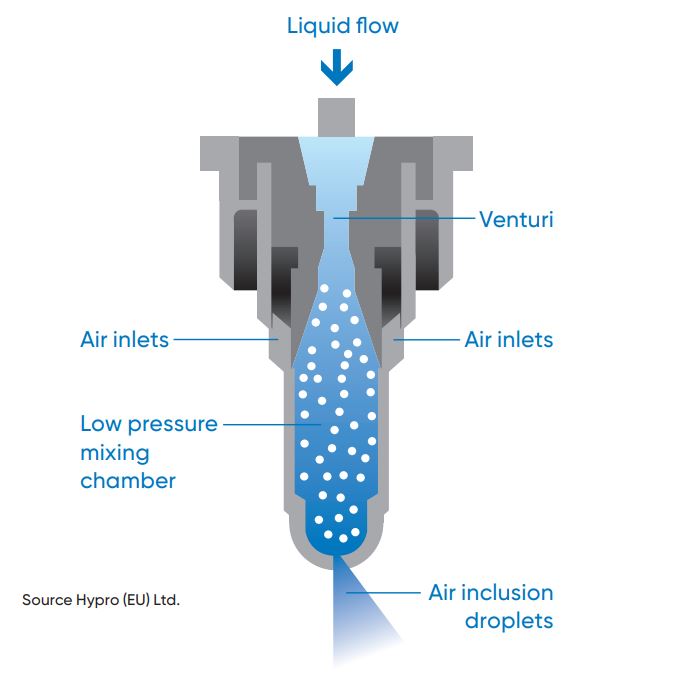
Air inclusion nozzles reduce drift by creating larger droplets containing small bubbles of air. This coarser droplet enables the spray to travel more accurately than a medium-sized droplet from nozzle to target. On impact, the droplet bursts leaving small droplets across the leaf surface. This leads to less drift and more deposit of product onto the target leaf.
ProClova® XL, ProGrass™ and Thistlex® Pro must be applied in 200 litres of water/hectare and in conjunction with drift reduction technology which meets the 3-star (75%) drift reduction requirement.
It's good practice to use drift reduction nozzles with our wider range of grassland herbicides too.
See the Spraying Low Water Volumes in Grassland video in the ‘How To’ section of the Corteva Forage App. If you haven't downloaded the app yet, you can do so here.
|
|
Early season weed control using ProGrass™
|
ProGrass™ contains Arylex™ and is a new product that gives long-lasting control of docks, nettles, buttercups, plantains and dandelions in established grassland. ProGrass is also effective on tough to kill hogweed and cow parsley. It’s a fast-acting formulation with a 7-day cutting interval following spraying, making treatments between silage cuts and in rotational grazing systems more feasible. Where docks are large ahead of first silage cuts, an interval at least 21 days following treatment before cutting is recommended for optimum reduction in dock biomass.
ProGrass can be used on both grass that is cut or grazed, so is ideal for fields being used for zero grazing; silage, haylage or hay production; and grazing.
With its concentrated EC formulation and 3 active ingredients, ProGrass has a lower dose rate of 1.5 L/ha, compared to 2.0 L/ha for most other Corteva products applied in established grassland.
|
Clover-safe weed control and the importance of temperatures for early season use
|
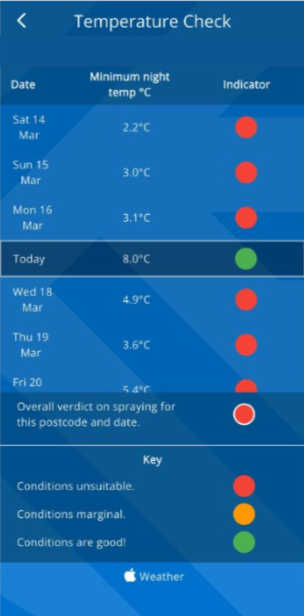
To optimise the performance of ProClova® XL, it is critical to adhere to the label requirement to spray when overnight temperatures are forecast to be above 8°C for a period from 3 days before to 3 days after proposed application date. In 2025 there was an extended period where daytime temperatures were in double figures, but overnight they were dropping to near 0°C. This fluctuation in temperature can cause reduced weed efficacy and affect clover safety.
There is a useful ‘Temperature Check’ tool in our Forage App. Based on the selected postcode, the tool will find the nearest weather station and then show you the current spray guidance for the intended application.
|
|
Managing the threat from Sycamore seedings in equine paddocks
|
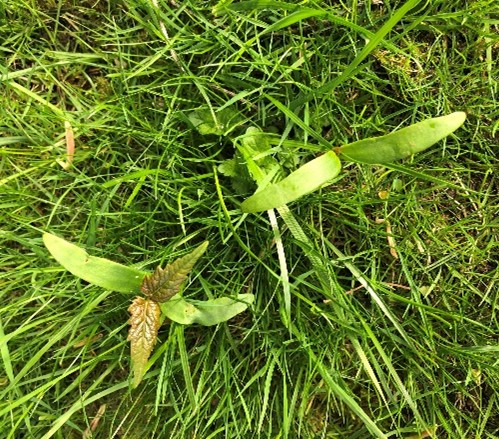
Horse and pony paddocks typically see flushes of sycamore seedlings in early spring. Some sycamore seedlings contain the toxin hypoglycin A which, when eaten by horses or ponies, can cause the sometimes-fatal condition equine atypical myopathy.
Sycamore is not a label weed for Corteva's grassland herbicides, but spot treatment with Grazon® Pro or a boom spray with ProGrass™ will give control of sycamore seedlings. For paddock owners who do not hold sprayer qualifications, the product SBK Brushwood Killer can be used. Alternatively, you can employ a spray contractor to treat paddocks with a professional use herbicide.
Horse owners need to be aware of the consequential extended grazing intervals needed following the treatment of sycamore seedlings. As with the control of ragwort, it is necessary for the weed to have completely died and rotted down before animals graze the field again.
Any recommendations for off-label or anecdotal control are only indicative and should not be considered a recommendation for use on the part of Corteva Agriscience. The user assumes full responsibility for use on these weeds.
|
|
Forefront® stewardship and best practice guidance
|
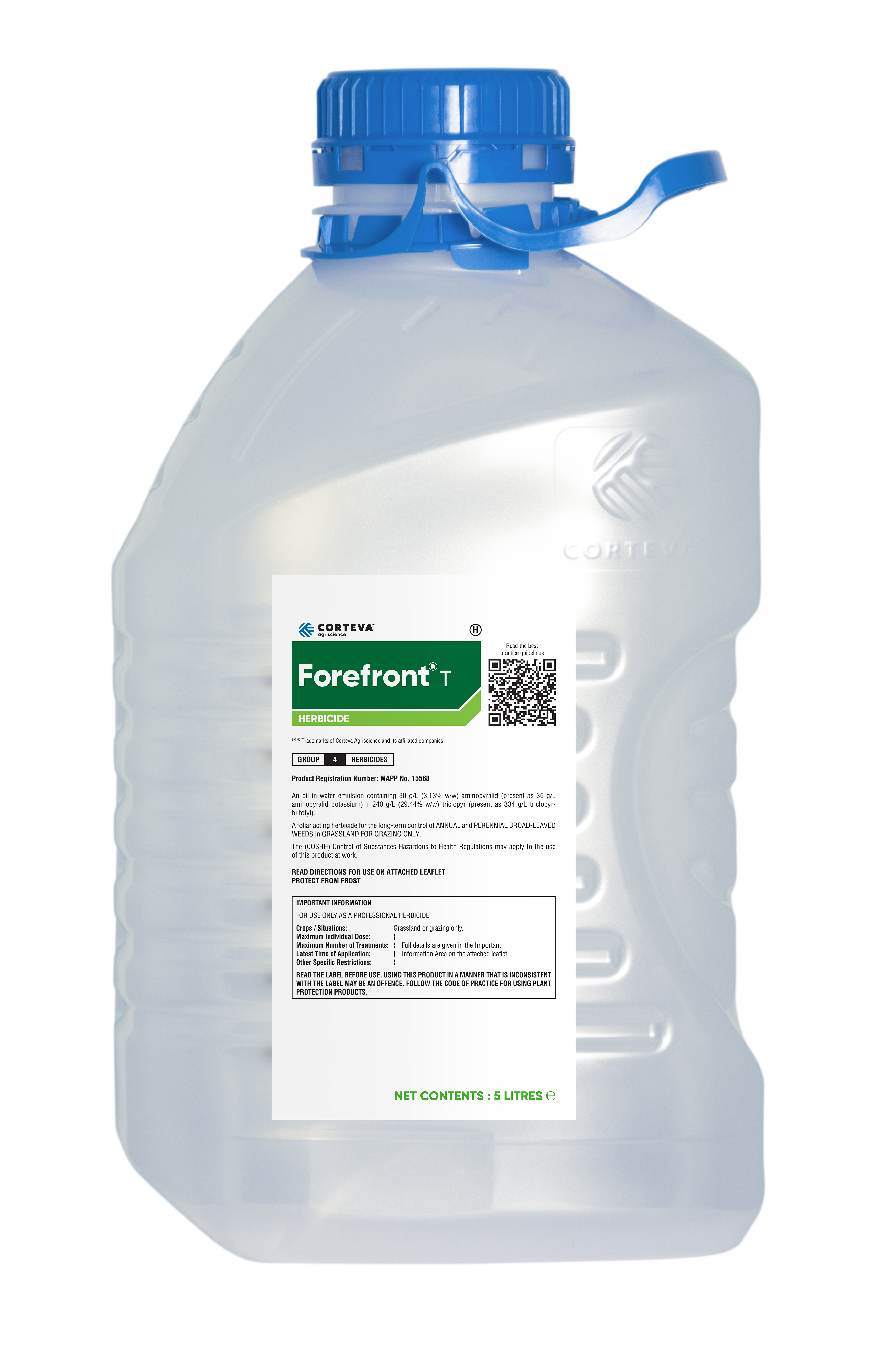
High levels of stewardship for Forefront T are required to ensure users follow the guidelines on forage and manure management post use. A Best Practice Guide is in place to support this. Access via the QR code on the label – this links to a downloadable and printable “Best Practice Guidelines” PDF. This guide contains all of the stewardship information needed by users and replaces the previous tool in the Forage App which was set up to email users this same information.
|
|
Instinct®: lock in Nitrogen to boost maize yields
|
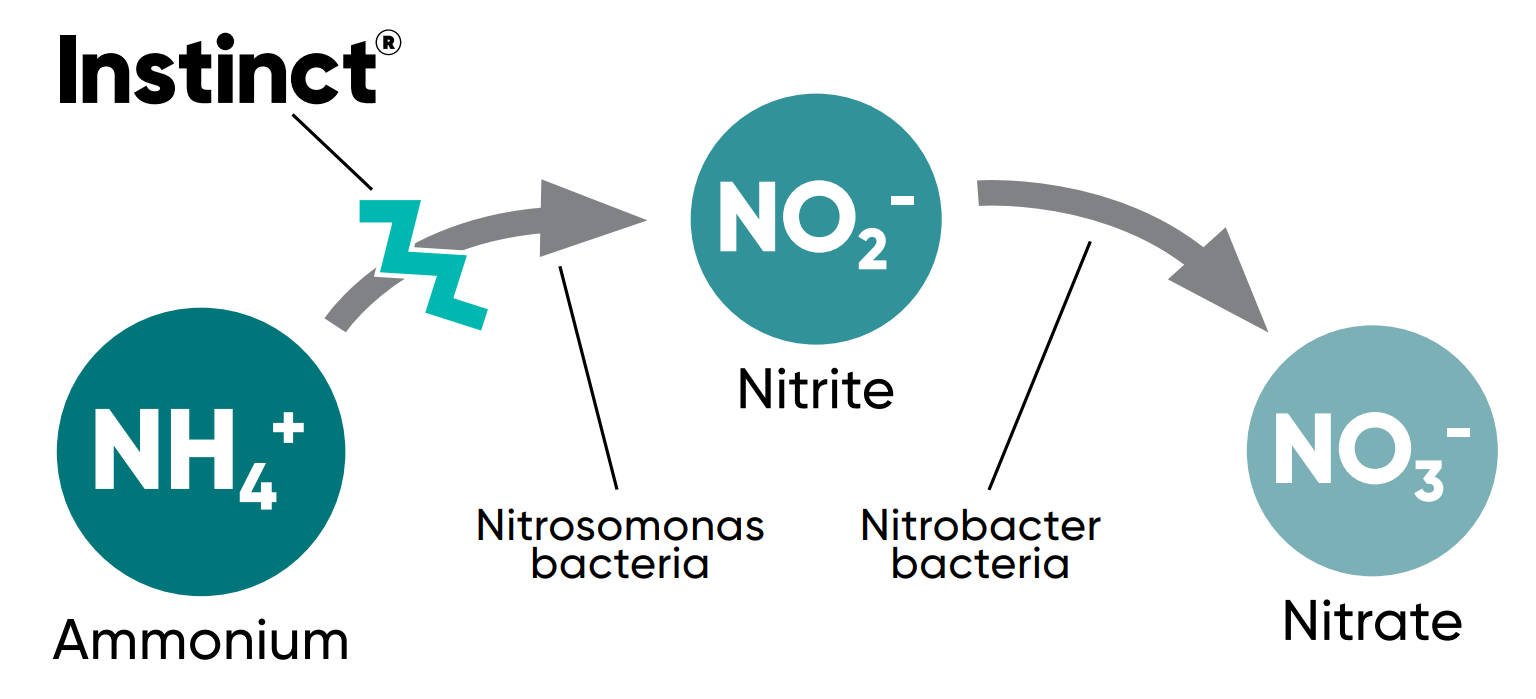
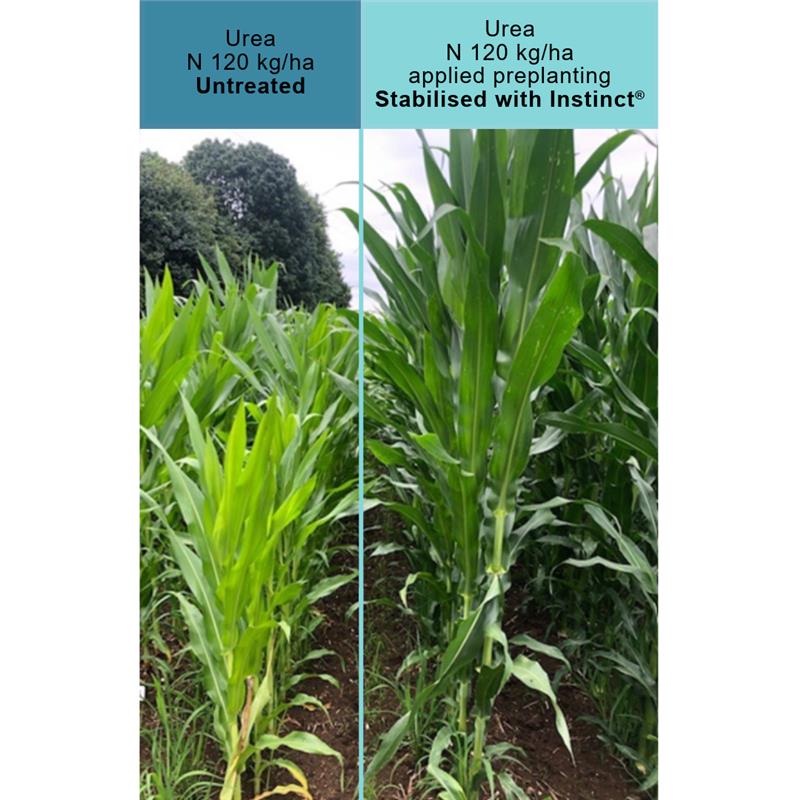
As a crop, maize has traditionally been under-fertilised, and this is largely due to it requiring a significant amount of nitrogen - around half - post-flowering. Nitrogen stabilisers slow down the conversion of ammonium to nitrate, preventing nitrogen loss through leaching and denitrification. Trials using Corteva's Instinct have shown a reduction in leaching of around 50%, and a reduction in denitrification through greenhouse gases of approximately 45%. This means nitrogen is kept in the soil for longer, and for a crop such as maize, this has a significant impact on yields, as it is available to the plant when it is needed.
|
|
|
Forefront® T registration revocation
|
Forefront Pro will replace Forefront T from 2027 onwards, so this year will be the last full year of sales for Forefront T.
The authorisation of Forefront T expires as follows:
- 31 May 2027 for sale and distribution of existing stocks and
- 30 September 2027 for the disposal, storage and use of existing stocks
- Farmers can apply Forefront T until 30th September 2027
Any additional updates on the Forefront T authorisation expiration will be shared via this technical update newsletter during the season.
|
Win 100,000 maize seed kernels:
celebrating 100 years of Pioneer®
|
To celebrate 100 years of Pioneer in 2026, we're giving five lucky growers the chance to win 100,000 maize seed kernels. All prize seed will be treated with LumiGEN® Bird Repellent for added early-season protection.
To put this into perspective, a 50,000-kernel bag will typically sow around 0.48 ha, meaning the full prize covers approximately 0.97 ha, depending on drilling rates.
|

|
Increase maize yields with BlueN™
|
BlueN™ is a nutrient efficiency biostimulant for use in a broad range of crops including maize. It contains Methylobacterium symbioticum, a bacteria found in nature.
It takes up nitrogen from the atmosphere and boosts nutrient efficiency throughout the duration of crop growth, contributing to increases in yield.
BlueN provides a sustainable, alternative and supplemental nitrogen source that reduces reliance on soil‑derived nitrogen, ensuring the plant has access to nitrogen all season long.
|

|
Key features of BlueN include:
- Provides a sustainable source of nitrogen
- Provides a supplemental source of nitrogen throughout the growing season particularly during periods of nitrogen demand from the crop
- Enhanced plant growth and resilience
These features give you stronger, more resilient crops by supporting natural growth, and ensuring a dependable, sustainable nitrogen supply throughout the season.
Learn more about BlueN here.
|
|
|
Q: Are you able to give some more information on herbal leys and what species would be a good option if using ProClova® XL?
A: We have seen some recovery post treatment on chicory and bird's foot trefoil in a newly sown ley situation. We are undertaking trials to assess effect on established populations and a wider range of species and will share that in due course.
Q: Would the addition of XL adjuvant to other grassland herbicides such as Doxstar® Pro enhance the level of weed control?
A: No. XL is only registered for use with ProClova and will not be available as a straight product.
Q: What level of control of fat hen and mouse-eared chickweed can be expected with ProClova XL?
A: Fat hen control is circa 75%. Common chickweed control is circa 85%. Based on minimal data, we would expect mouse-eared chickweed control to be circa 75%.
|
|
|
Our hotline team are on hand to answer any technical queries or concerns you have. Please do not hesitate to get in touch via the contact details below, or by submitting an enquiry.
Click here to find the contact details of your local forage specialist.
|

|