Welcome to the Corteva™ Agriscience
Forage Agronomy Update
These regular technical notes come with CPD points and will help those interested in improving grassland and forage productivity on dairy, beef, sheep and equestrian enterprises. We post frequently on our social media channels, so you’ll want to make sure you’re following @CortevaUK on X and Facebook.
|
|
|
Late drilling? Choose a hybrid built to catch up | Planting maize after grass: hybrid choice matters where wireworm risk is higher | Principal Forte: your comprehensive weed control solution for maize | First cut grass silage: matching inoculants to dry matter at harvest | Protecting nitrogen use efficiency as crop demand rises | Use Temperature Check tool to support ProClova XL use | BlueN - supporting nitrogen efficiency in forage maize | Buttercup control just got easier | Dock control ahead of the first silage cut | Weed control in newly sown leys | Best Practice Guides to steer on Forefront T stewardship | Download our Best Practice Guides | FAQs | Contact us | BASIS and NRoSO points
|
|
|
|
Late drilling? Choose a hybrid built to catch up
|
Cold or wet spring conditions can easily push maize drilling beyond the ideal mid‑April to mid‑May window, increasing the risk of lost yield and delayed harvest. When planting is delayed, hybrid choice becomes critical.
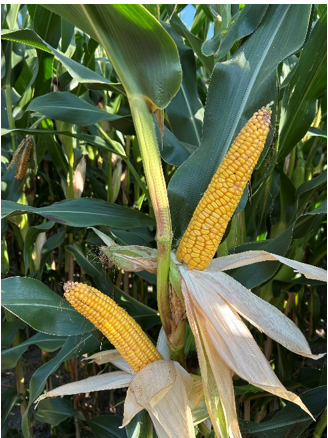
New for 2026, P68106 is specifically suited to these situations. As an extra‑early maturity hybrid (FAO 160), P68106 has shown an outstanding ability to progress quickly through the season, helping crops reach harvestable dry matter even when drilling is pushed back. In two years of PACTS trials across 19 sites, it delivered the highest dry matter content in the Pioneer® range, averaging 40.5%, combined with very high starch levels.
What sets P68106 apart for late sowing is its exceptional early vigour and fast stover dry‑down, enabling rapid establishment and efficient use of a shortened growing season. Its strong performance on less favourable sites and good eyespot resistance further supports its reliability in challenging years.
Where drilling is delayed and harvest timing matters, P68106 gives growers confidence that yield, quality, and maturity can still be achieved, making it the standout Pioneer hybrid for late‑sown maize in the UK and Ireland.
|
|
|
|
Planting maize after grass: hybrid choice matters where wireworm risk is higher
|
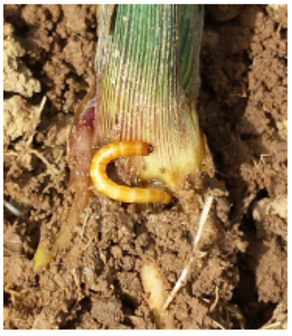
Maize crops following grass can be at greater risk from wireworms, particularly where fields have been in long‑term leys or minimum tillage systems. Wireworms, the larvae of click beetles, can cause poor establishment, plant loss and uneven crops, with damage often appearing as non‑emergence or stem feeding at the base of young plants.
|
|
Wireworm on the base of a maize stem
|
Where is the risk highest?
Wireworm pressure is greatest in:
- Fields in grass for four years or more
- Light, free‑draining or loam soils
- South‑facing or warmer fields
- Minimum tillage systems
Matching hybrids and seed protection
Choosing the right hybrid is a key part of managing this risk. P68106, P7179, and P7326 combine extra‑early maturity and strong early vigour, helping crops establish quickly in grass‑to‑maize situations identified through PACTS on‑farm testing.
These hybrids are available with LumiGEN® insecticide bird repellent seed treatment, which protects seedlings during the critical establishment phase by diffusing from the seed into the surrounding soil and acting through contact with wireworms. This targeted, seed‑applied approach supports early crop vigour while aligning with responsible, best‑practice use.
Proven through PACTS
PACTS trials consistently show the importance of early vigour, rapid dry‑down and reliable performance across variable sites. P68106 offers exceptional early vigour and very high dry matter content, while P7179 and P7326 continue to stand out for reliability on less favourable sites and grass break situations.
By combining field risk assessment, hybrid selection and appropriate seed treatment, growers can give maize the best possible start after grass and reduce the impact of wireworms where it is most likely to occur.
|
Principal Forte® : your comprehensive weed control solution for maize
|
Use Principal Forte for highly effective broad-spectrum weed control with exceptional crop safety. The 3 active ingredients: nicosulfuron, rimsulfuron and dicamba combine to deliver control of all key grass and broad-leaved weeds. This formulation and dose rate ensure many problem weeds such as fat hen, bindweeds, nightshade, thornapple and small cranesbills are better controlled than with other post-emergence herbicide options such as mesotrione and nicosulfuron mixes. Principal Forte also contains isoxadifen, a proven crop safener so bringing re-assurance with respect to crop safety.
Some of the warm season grasses increasingly seen on land coming out of SFI mixes such as barnyard grass, green bristle grass and hairy finger grass are well controlled and field use reports from both end users and agronomists over the last 2 years, as well as trials results, show good control of blackgrass where resistance is not seen.
A tank mix option with Starane® Hi-Load, the only fluroxypyr brand with support for tank mixing in maize, is a useful solution to help deal with troublesome weeds like docks and chickweed and oversized weeds like nightshade and bindweed.
Principal Forte must be used with the adjuvant Vivolt at 0.2% of the spray solution, or with a 95% rapeseed triglyceride (codacide) but this can be negated if tank mixing with mesotrione.
|
First cut grass silage: matching Pioneer® inoculants to dry matter at harvest
|
Grass dry matter at harvest plays a major role in how well first cut silage ferments and feeds. Weather conditions, wilt time and sward type can all lead to wide variations in dry matter content, making inoculant choice critical to reducing losses and maintaining feed quality.
Wetter grass (low dry matter)
Pioneer 1188 is the go‑to choice where grass is harvested on the wet side or sugar levels are lower. Its unique, proprietary combination of bacterial strains works rapidly and efficiently to drop pH, ensuring reliable fermentation and strong preservation in challenging first cut conditions.
Drier grass (high dry matter)
As dry matter content increases, the risk of heating during feed‑out also rises, making aerobic stability increasingly important.
Pioneer 11G22 RR is designed for grass silage over 25% dry matter, delivering fast fermentation alongside Rapid React aerobic stability – from as little as 7 days after sealing. This makes it well suited to first cut silage where early opening or variable feed‑out rates are expected. An organic-approved formulation (11G22 organic use) is also available.
Pioneer 11GFT is ideal where higher dry matter grass silage quality needs to go further. Its triple mode of action supports fermentation, improves aerobic stability and enhances fibre digestibility through patented microbial technology that produces ferulate esterase enzymes, helping unlock more energy from the forage.
Managing higher-risk silage situations
Where grass silage is very dry, chop length is longer, compaction is challenging or feed‑out is slow, Pioneer 11A44 can be a useful tool to dramatically reduce heating across a wide range of high dry matter silages.
|

|
Matching inoculants to grass dry matter
Assessing grass dry matter at harvest and matching it to the right inoculant is one of the simplest and most effective ways to protect silage quality. From wetter first cuts to higher dry matter grass, choosing the correct Pioneer inoculant helps safeguard fermentation, stability and feed value.
Click here to learn more about our range of silage inoculants.
|
Protecting nitrogen use efficiency as crop demand rises
|
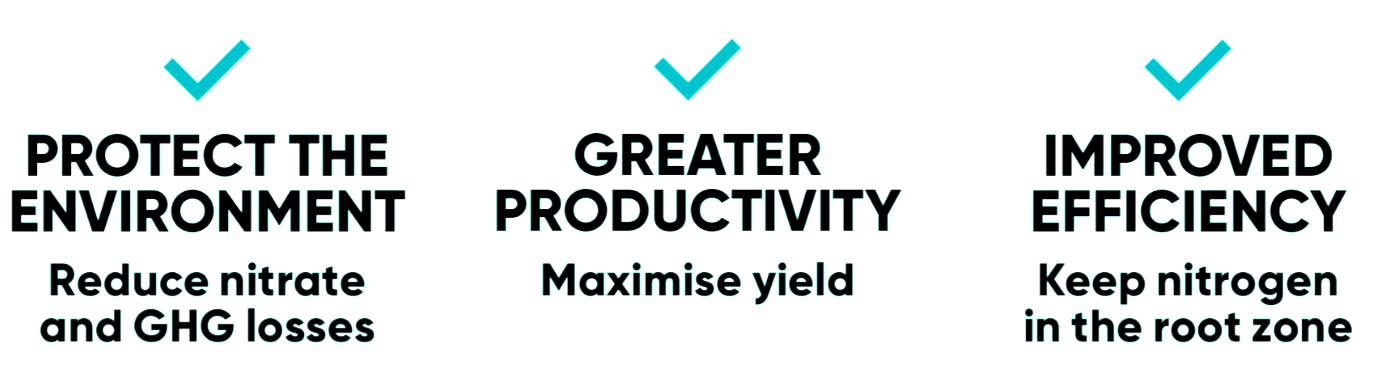
Growers are facing fresh challenges with rising nitrogen prices, making it more essential than ever to maximise nitrogen use efficiency on farm. One effective strategy is to consider the use of a nitrogen stabiliser, which can help ensure that every kilogram of nitrogen applied delivers optimal benefit to your crops.
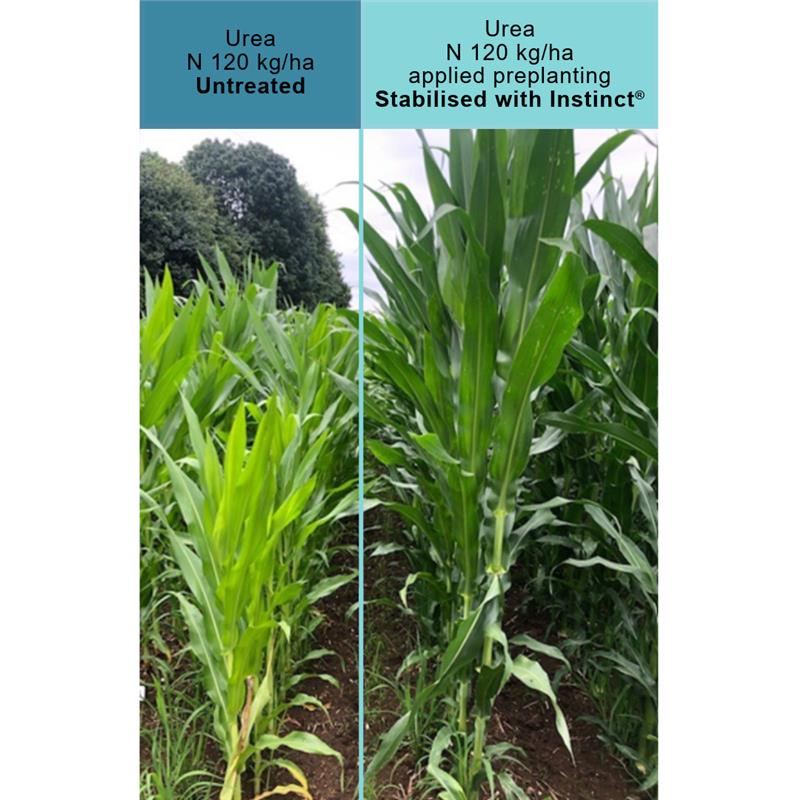
Instinct®, a nitrogen stabiliser containing Corteva’s unique Optinyte™ technology, is specifically designed to keep more nitrogen in the soil for longer. By slowing the conversion of ammonium to nitrate, Instinct helps to minimise nitrogen losses through leaching and denitrification, ensuring more remains available in the rooting zone. This not only supports healthy crop growth but also helps maintain yields, even if nitrogen application rates are reduced.
|
|
As maize planting starts and soil temperatures rise, the risk of nitrogen loss accelerates. Maize requires a steady supply of nitrogen throughout its growing season, and unpredictable spring weather - especially heavy rainfall on lighter soils - can increase the risk of losing valuable nutrients before the crop can utilise them. The application of Instinct helps keep nitrogen available for longer, supporting strong stem, leaf and cob development, and ultimately safeguarding yield potential.
Trials across the UK and Europe consistently show that using Instinct can result in yield increases of more than 10%, both in cob and overall plant size. This benefit is linked to improved nitrogen availability during the critical months from June to August.
|
|
Use Temperature Check tool to support ProClova® XL use
|
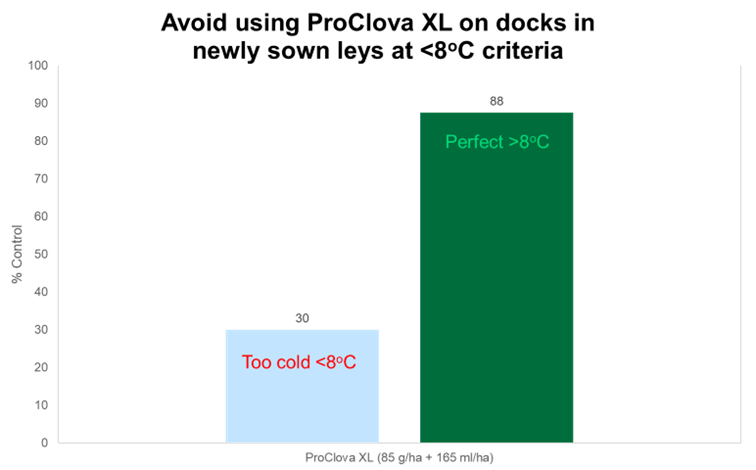
To secure optimal levels of weed control with ProClova XL, minimum night-time temperatures need to be above 8oC for 3 days before and for 3 days after an application.
To track this, use the Temperature Check feature by clicking on the Best Practice icon in the Corteva Forage App. You can now map any postcode (GB or NI) or Eircode and also select a date for up to 3 days ahead. You can also view historical temperature data in the same format going back any day for up to two years!
The latest version of the Forage App is 5.0.6 (build 47)
If you don't have this version, go to the Apple App Store or Google Play Store to update or re-download the app.
To download our app, whether in UK or IE click here.
|
|
BlueN™ - supporting nitrogen efficiency in forage maize
|
As maize drilling progresses and crops approach early leaf stages, BlueN offers a practical way to support nitrogen availability throughout the season and help crops convert early growth potential into yield and feed quality.
BlueN is a novel nutrient efficiency biostimulant for use on a broad range of crops. BlueN contains Methylobacterium symbioticum, a bacterium found in nature that quickly colonises the aerial part of the plant, moving to actively growing leaves and maintaining continuous nutrient use efficiency, all season-long.
BlueN supports crops during periods of high nitrogen demand, helping improve nitrogen use efficiency and crop consistency.
Why include BlueN in maize?
- Enhances nitrogen availability within the plant during key growth phases
- Supports dry matter yield and forage quality potential
- Provides a sustainable nitrogen source that is not subject to leaching or volatilisation
Across UK and European maize trials, BlueN has delivered consistent improvements in dry matter yield and forage energy in the majority of situations, supporting both crop performance and return on investment when used under the right conditions.
|

|
|
|
Buttercup control just got easier
|
Removal of buttercups can dramatically improve grassland productivity, particularly in permanent grassland where re-seeding is not tenable.
They are a common problem in poorly drained land, horse paddocks where close grazing tends to open up the grass sward, grassland that is nutrient deficient or soils that tend to be more acidic in nature.
Buttercups can be poisonous to horses and livestock when eaten in large quantities, particularly when fresh. They contain a toxin called protoanemonin, which is released when the plant is crushed. This toxin irritates the mouth and gastrointestinal tract and, in extreme cases, can cause convulsions or even death. Although animals usually avoid the plant due to its bitter taste, they may consume it if pasture is overgrazed or other forage is scarce.
Flowering from May to August, buttercups produce golden, cup-shaped flowers and can grow up to 50 cm in height.
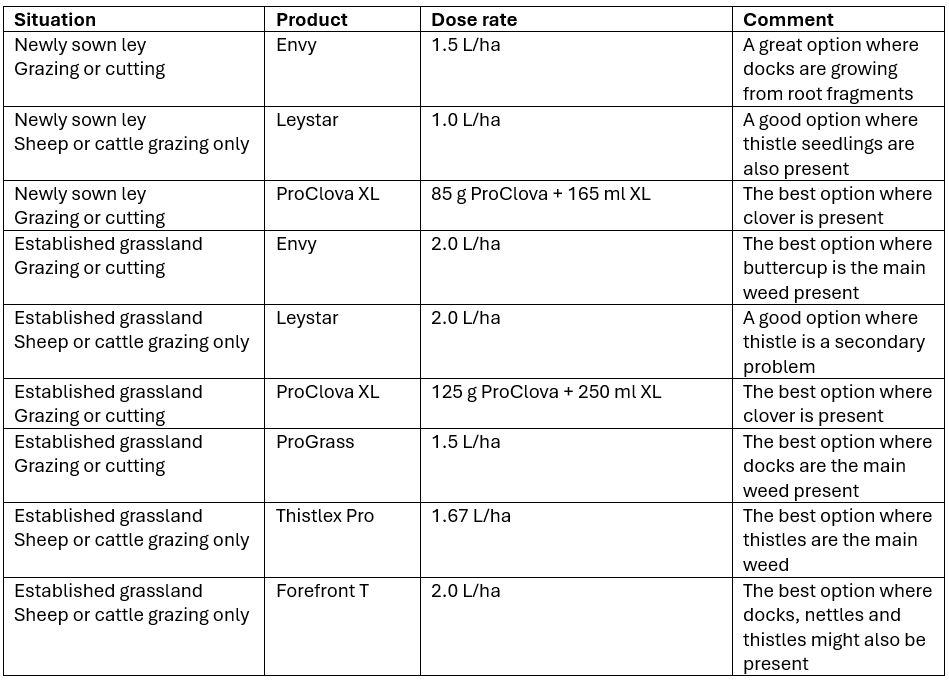
Depending on other weeds present, the table below shows control options.
For the highest levels of control of large, long-established populations of either creeping or meadow buttercups use Thistlex® Pro which will work well even if they are flowering.
|
|
Dock control ahead of the first silage cut
|
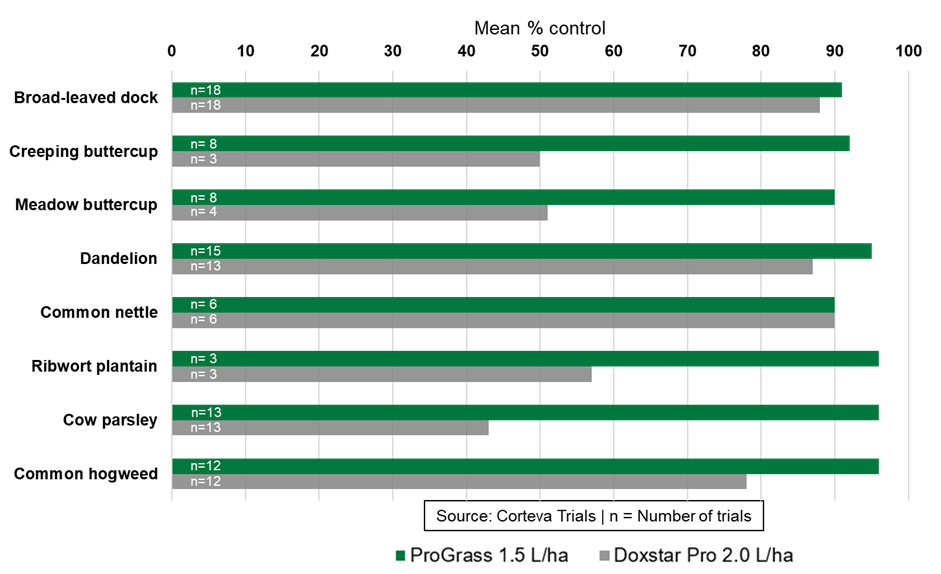
Doxstar® Pro gives class-leading and long-lasting control of docks, nettles and dandelions. With the addition of Arylex™ active, ProGrass™ expands Doxstar Pro's weed spectrum and enhances the level of control. It is a more concentrated formulation with a dose rate of 1.5 l/ha compared to 2.0 l/ha for Doxstar Pro, so this makes handling easier and reduces packaging waste.
The graph below shows the differences in performance.
|
|
Another advantage of ProGrass over all other grassland herbicides is its fast-action with a label that supports a short 7-day cutting interval when needed. This compares to a 28-day interval (e.g. Doxstar Pro). It is still advisable to plan a 14 to 21-day interval to allow dying biomass of larger docks to reduce before cutting, but if plans don’t come together, the option is there to use.
|
Weed control in newly sown leys
|
|
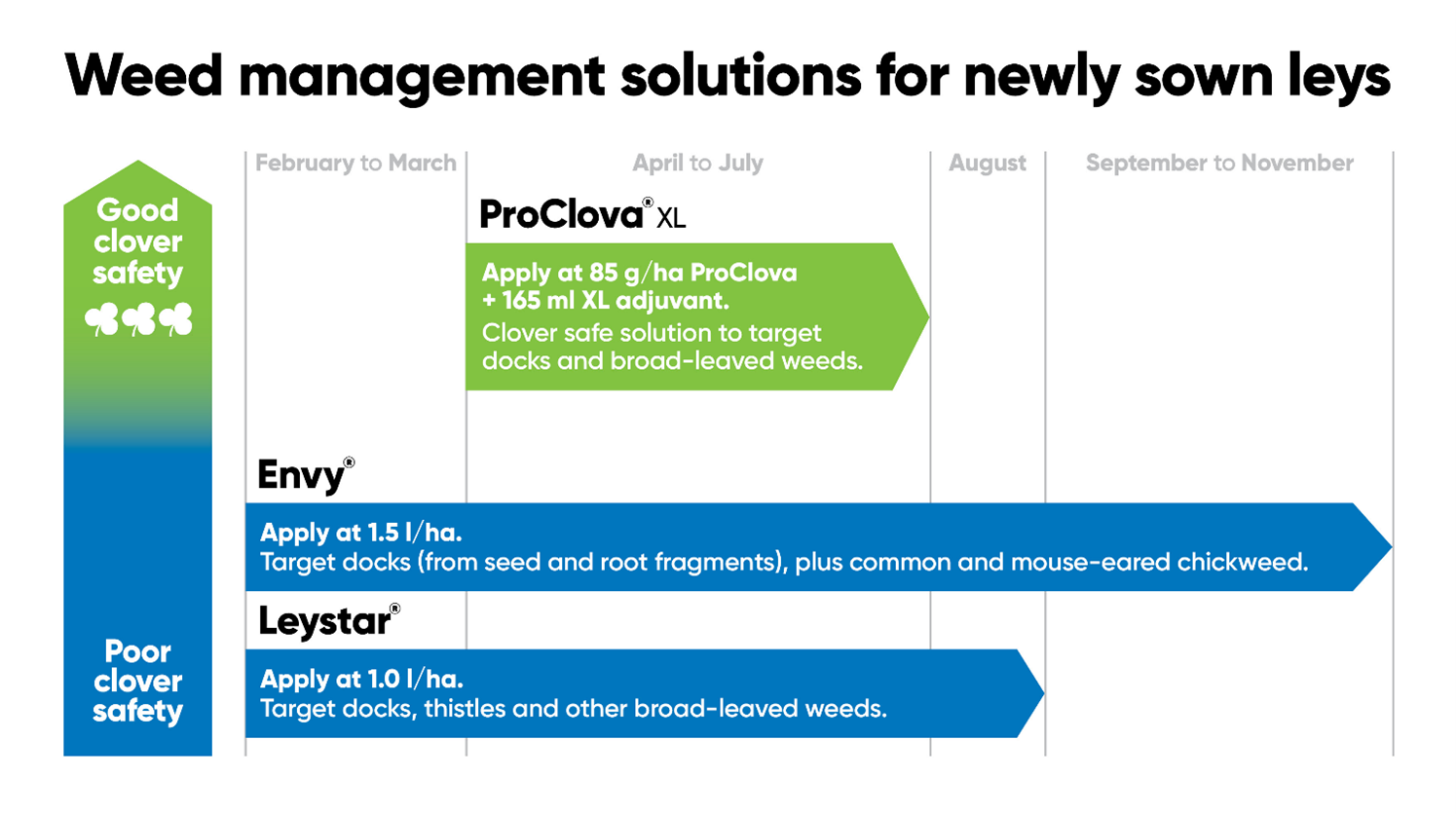
The successful establishment of a productive new ley requires a good seedbed, correct pH, a plentiful supply of nutrients and correct choice of seed mixture. Once the seeds are germinating, broad-leaved weed control is crucial, as competition from these weeds in the early stages of crop establishment can impact production for years to come. The best time to control perennial weeds, such as docks and thistles, is when they are small in the new ley.
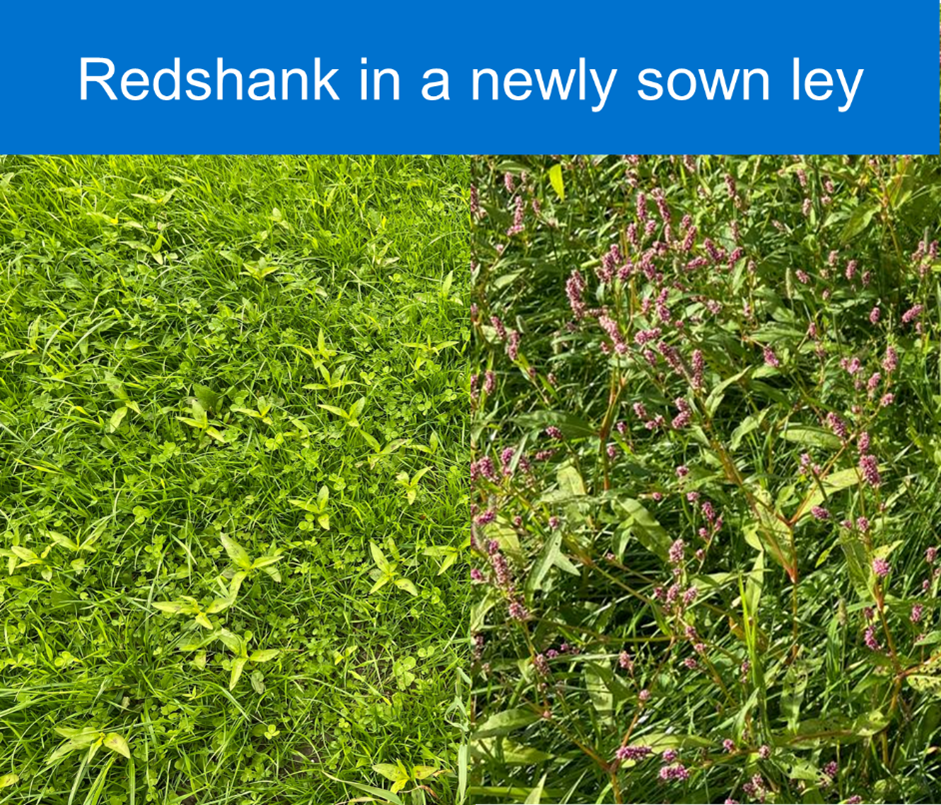
Annual broad-leaved weeds can also have a major impact on the establishment of the crop. Weeds such as redshank (shown below as seedlings and in flower), chickweed, fat hen, and mayweed are key weeds to control. For full lists of weeds go to our Forage App.
|
|
Best Practice Guides to steer on Forefront® T stewardship
|
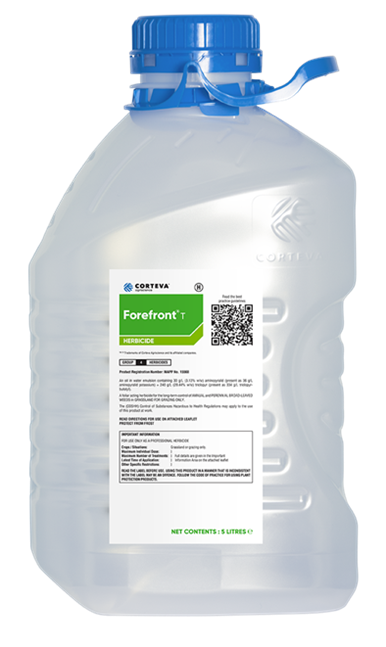
Best Practice Guidelines (BPG), available for ProClova® XL, ProGrass™, Thistlex® Pro and Forefront T will support the user to secure optimal use. They can be accessed via a QR code on the product label, on our website or via the Forage App. In the case of Forefront T, the BPG will replace the need to record a recommendation via the Forage App.
Printed copies of our BPGs are also being made available at points of sales so that they can be given to purchasers of the product.
|
|
Download our Best Practice Guides
|
Best Practice Guides can be downloaded on our website:
|

|
|
|
Q: Where in the Forage App can I find the product labels and Best Practice Guidelines for ProGrass™?
A: For product labels go to 'Weed Control' then 'Products & Labels' and select the relevant product. For the Best Practice Guidelines go to 'Best Practice' and the guideline will be available there.
Q: Should I be spraying docks given the current cold night temperatures and slow growth of docks?
A: Doxstar® Pro or Forefront® T can be used when docks show good active growth and new green leaf material. If using ProClova® XL then wait for temperatures to exceed 8oC. If the cutting date for your first cut of silage is less than 21 days away from the intended application rate then use ProGrass as this label supports a 7 day cutting interval.
Q: What can I use to control Yellow Rattle in grassland?
A: We would expect to see good control with Forefront T. Apply to grazing ground grased by cattle and sheep only.
Q: I have a bad problem with buttercups. What can I spray and what is the subsequent re-seeding interval if I want to overseed?
A: Use Envy® at 2.0 l/ha or ProGrass at 1.5 l/ha. The re-seeding interval for grass is 4 weeks for both products.
|
|
|
Click here to find the contact details of your local forage specialist.
|
|
USE PLANT PROTECTION PRODUCTS SAFELY. Always read the label and product information before use. For further information including warning phrases and symbols refer to label. ®™ Trademarks Corteva Agriscience Limited and its affiliated companies. All other brand names are trademarks of other manufacturers for which proprietary rights may exist. All manufacturers trade names and trademarks are duly acknowledged. © 2026 Corteva. Instinct® contains nitrapyrin. ProClova® XL contains florpyrauxifen-benzyl and amidosulfuron. BlueN™ contains Methylobacterium symbioticum. ProGrass™ contains triclopyr-2-butoxyethyl ester. Doxstar® Pro contains fluroxypyr and triclopyr. Forefront® T contains aminopyralid and triclopyr. Thistlex® Pro contains clopyralid and triclopyr. Envy® contains fluroxypyr and florasulam. Leystar® contains fluroxypyr, clopyralid and florasulam. Starane® Hi-load HL contains fluroxypyr. Principal® Forte contains dicamba, nicosulfuron & rimsulfuron.
 | | | | | | | |