|
In the November edition:
- Autumn solutions for broad-leaved weeds in cereals
- Key information to support propyzamide applications
- Kerb Flo 500 on winter beans
- Historical PACTS trial results: yield performance in 2025
- Share your experience on seed treatments in cereal crops
- News and views from the Corteva team
- Update your communication preferences, enter our monthly prize draw, plus ways to earn BASIS & NRoSO points
|
|
|
Autumn solutions for broad-leaved weeds in cereals
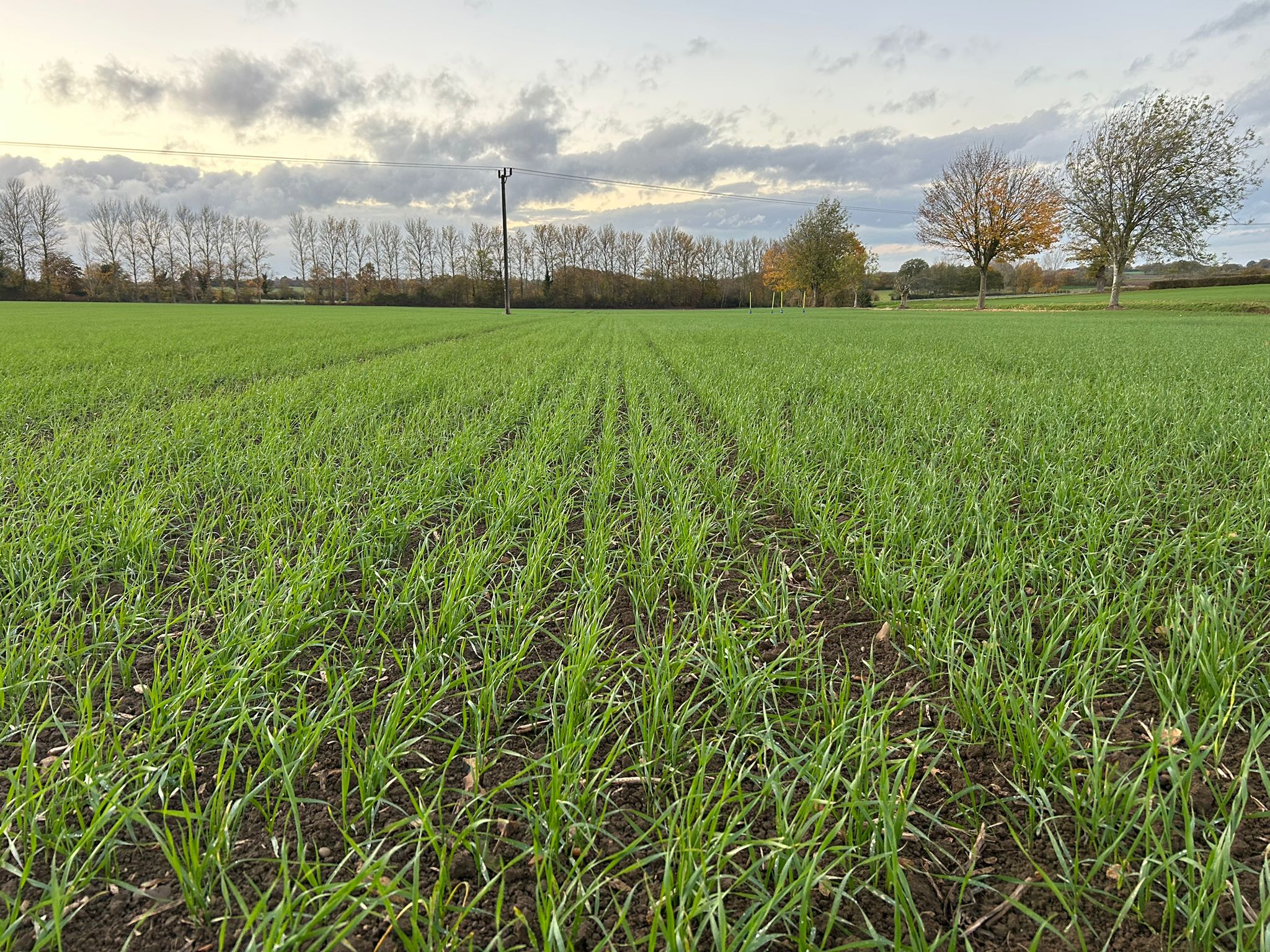
Last season saw some difficult broad-leaved weed challenges, namely groundsel and poppy. Cereal drilling is well ahead of previous years and with the warm, dry autumn has increased herbicide breakdown, reducing the length of protection that residual herbicides offer, resulting in higher levels of broad-leaved weeds.
Increasingly, autumn has seen greater levels of challenging weeds as several broader-spectrum residual actives have been lost. Current residual herbicide options have a more limited spectrum and leave gaps for these weeds to slip through, so early control of these weeds is essential!
Corteva's Zypar® and Spitfire® products can be used in both autumn and spring to control these difficult weeds. Unlike the phenoxies and SU's, these products can be used from GS13 and are not affected by cooler conditions.
Take advantage of early spray windows for broad-leaved weed control and utilise Zypar or Spitfire at 0.75 l/ha in the autumn, increasing the rate to 1.0 l/ha in spring to control a wide range of species including poppy, chickweed, cleavers, fumitory, volunteer beans, brassicas and mayweeds.
Want to find out more?
|
|
|
|
Current conditions for propyzamide application
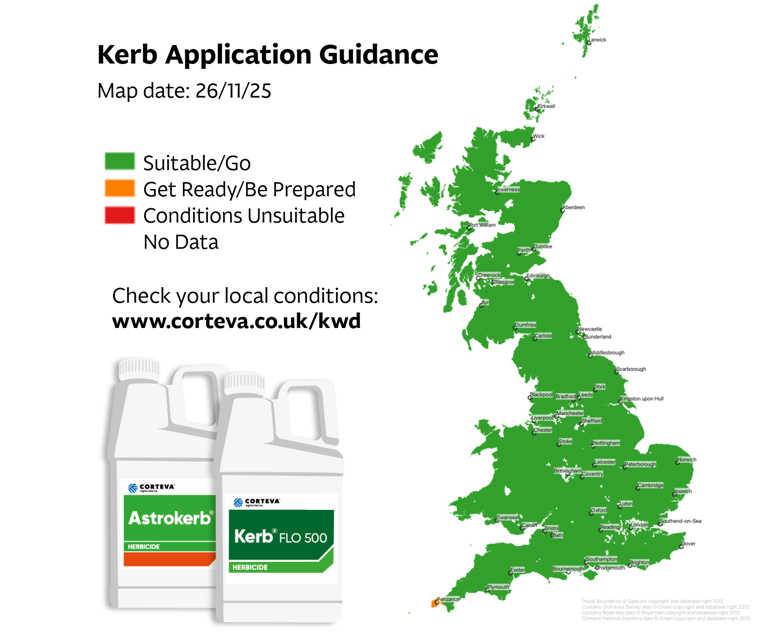
Soil temperatures are continuing to fall and conditions are now suitable for a propyzamide application.
Applications should be made when soil temperatures at 30cm deep are below 10°C, there is suitable moisture, and the forecast does not predict heavy rainfall within a couple of days of application.
With many big oilseed rape crops about, remember that crop size is not a barrier. Propyzamide can be applied once the crop has reached 3 true leaves and efficacy is not affected by large canopies.
Growers should prepare to treat individual fields when conditions allow. Use the Kerb Weather Data tool to check your specific area and remember - Right Rate, Right Conditions, Right Time. For Kerb Weather Data with advanced functionality, download the free Corteva Arable App on Google Play or the App Store.
|
|
Astrokerb® and Kerb Flo 500® can also be tank-mixed with:
- Belkar® to provide additional weed control on cleavers, fumitory, mayweeds, shepherd's purse and cranesbill.
- With many early-drilled large canopy crops about, the risk for Phoma leaf spot and light leaf spot increases. Astrokerb and Kerb Flo 500 can be mixed with a wide range of fungicides to control Phoma and light leaf spot diseases, avoiding an additional spray-pass.
For a full list of tank mix compatibilities, click here.
|
Have you seen our Propyzamide Knowledge Hub?
We frequently add new resources, including a CPD course, to test your knowledge on propyzamide and stewardship. Visit the Knowledge Hub to find out everything you need to know. Complete the quiz by the 30th November 2025 for a chance to win thermal work gloves or a soil thermometer!
|
|
|
|
Kerb® Flo 500 on winter beans
Kerb Flo 500 has approval for grass weeds, including black-grass and ryegrass, and some broad-leaved weed control (e.g. black bindweed, chickweed, fat hen, knotgrass, small nettle and speedwells) on winter beans. Astrokerb is NOT approved on beans due to crop selectivity.
|
|
|
Historical PACTS® trial results:
Yield performance in 2025
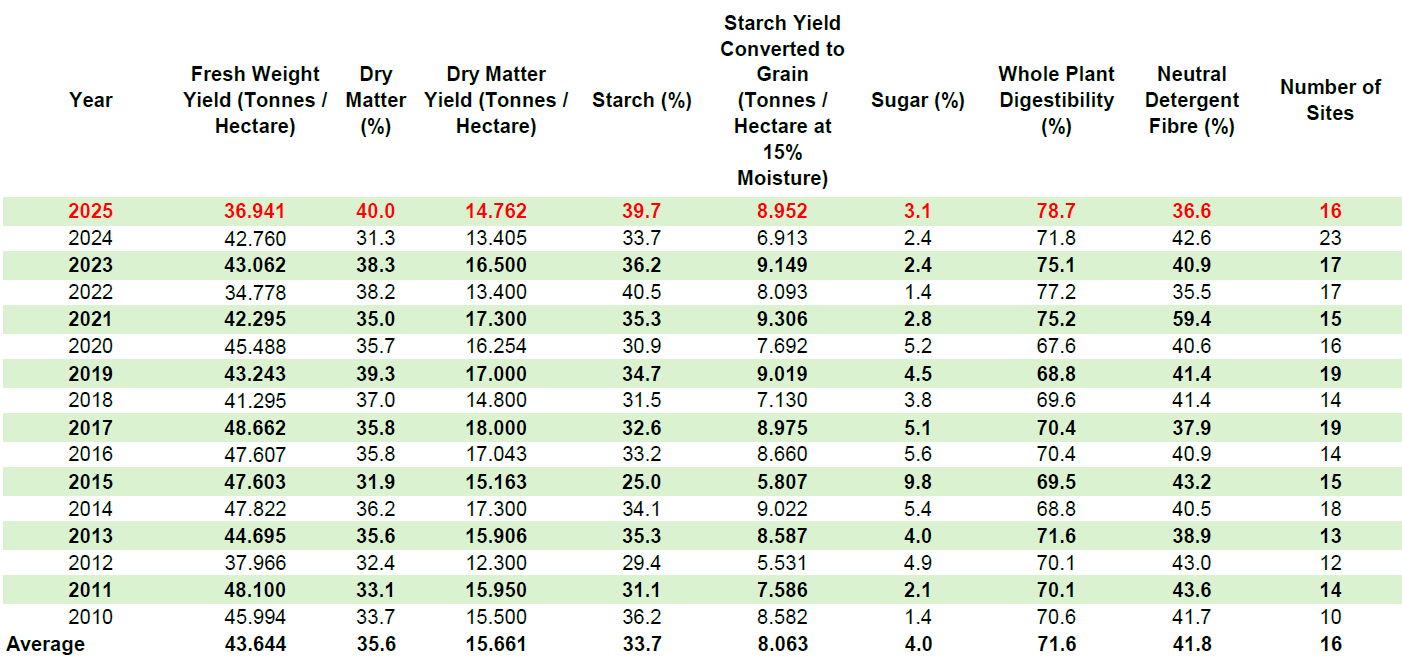
The latest PACTS trials continue to provide valuable insights into forage hybrid performance across the UK and Ireland. Here's a summary of the fresh weight yield results for 2025, set against previous years:
2025 yield highlights:
- Fresh weight yield: 36.94 tonnes/hectare
- Dry matter yield: 14.76 tonnes/hectare
- Starch yield (converted to grain): 8.95 tonnes/hectare
Year-on-year comparison:
- 2024: Fresh weight yield was higher at 42.76 t/ha (dry matter)
- 2023: Yield peaked at 43.06 t/ha (fresh) and 16.50 t/ha (dry matter)
- 2021: Another strong year, with 42.30 t/ha (fresh) and 17.30 t/ha (dry matter)
- Average (2010-2025): 43.64 t/ha (fresh), 15.66 t/ha (dry matter)
Key trends and insights:
- 2025's fresh weight yield is below the long-term average and recent peak years, suggesting a challenging season or changing trial conditions.
- Dry matter yield in 2025 remains competitive, outperforming 2024 and aligning closely with the multi-year average.
- Starch yield is notably higher than in 2024, indicating improved energy content for forage.
- Site distribution in 2025 is balanced between less favourable and favourable locations, supporting robust data across diverse conditions.
- The effect of drought was variable across the country; crops further west seemed to be impacted less.
Context and implications:
Whilst 2025 saw a dip in fresh weight yield compared to the previous two years, the dry matter and starch yields remain strong reflecting ongoing improvements in hybrid selection and agronomic practices. These results reinforce the importance of monitoring both quantity and quality in forage production, ensuring optimal outcomes for livestock nutrition.
Historical Forage PACTS Trials Control Hybrid Results Summary:
|
|
|
|
Share your experience on seed treatments
in cereal crops
|
|
|
|
News and views from the Corteva Team
This month we marked International Men's Day with a dedicated webpage celebrating some of the men across Corteva who make a difference every day - from the field, the lab, the office, to the farm. The page shares inspiring stories from colleagues in the UK and Ireland, exploring what motivates them, why they love being part of Corteva, and how inclusivity and equality shape our culture.
Scott Hayles, who many of you know, has become our UK and Ireland Crop Protection Commercial Sales Manager, effective from 1st November.
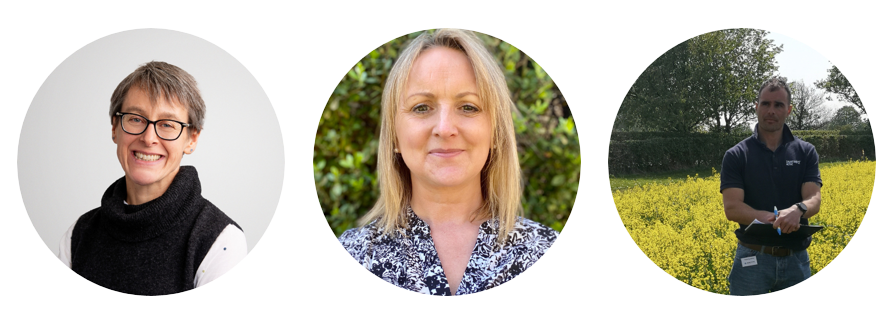
Get to know more of our team in our informative Q&A blog series:
|
|
|
|
|
|
|
Want to hear more from us?
Update your preferences and tailor your choices to make sure you receive the communications that are right for you.
Don't forget to enter into our monthly prize draw by ticking the box before submitting to be in with the chance to win!
|
|
|
Get in touch with our hotline team
|
CPD points
Subscribing to Corteva Agriscience Arable Update gives eligibility for 2 CP BASIS points and/or 2 NRoSO points and/or 2 CP points for those who are part of the BASIS Environmental Advisors Register (EAR) annually.
|
USE PLANT PROTECTION PRODUCTS SAFELY. Always read the label and product information before use. For further information including warning phrases and symbols refer to label. ®, ™ Trademarks of Corteva Agriscience and its affiliated companies. All other brand names are trademarks of other manufacturers for which proprietary rights may exist. All manufacturers tradenames and trademarks are duly acknowledged. © 2025 Corteva. Zypar® contains florasulam and halauxifen-methyl. Spitfire® contains florasulam and fluroxypyr. Kerb®Flo 500 contains propyzamide. Astrokerb® contains aminopyralid and propyzamide. Belkar® contains halauxifen-methyl (Arylex™ active) and picloram. Ympact® contains Fulvic Acid, Humic Acid, trace elements including Copper (0.45%), Manganese (0.74%), Zinc (1.1%), Boron, Cobolt, Sodium.
 | | | | |