
|
In the May edition:
- T2 fungicide choice: managing risk and protecting yield
- Optimising weed control in spring cereals with Pixxaro
- BlueN: supporting nitrogen efficiency as crops enter rapid growth
- Instinct: protecting spring nitrogen as crop demand peaks
- Post-emergence weed control with Titus and looking ahead to the late blight programme
- Our 2026 Pioneer hybrid winter oilseed rape guide is available now
- News and views from the Corteva team
- Update your communication preferences, enter our monthly prize draw, plus ways to earn IASIS points
|
|
|
T2 fungicide choice:
managing risk and protecting yield
Just when it looked like another dry year, many areas have now received welcome rainfall, with further rain forecast. As ever, fungicide decisions should be made with the coming four weeks in mind, rather than the preceding four weeks.
Where Questar™ (plus partner) was not applied at T1, it provides an excellent T2 solution, offering:
- Outstanding septoria control
- Robust yellow rust control
- A strong T2 choice following a T1 SDHI, to avoid exacerbating SDHI resistance
- Extensive, proven tank‑mix flexibility
Rate is always an important factor, and needs to be chosen based on the risk in the field, including variety, disease ratings and weather conditions. Persistence is directly linked to rate; so by using a robust rate, this gives assurance that if the head spray (T3) gets delayed for any reason, Questar offers up to 5 weeks protection when applied at full rate.
Always apply Folpet in the mix, as part of your anti-resistance strategy.
|
|
|
Optimising weed control in spring cereals with Pixxaro
Spring cereal growers are facing significant challenges this season due to prolonged dry conditions and later weed emergence. These environmental stresses not only hinder crop development but also reduce the efficacy of many herbicide treatments. Effective weed management remains critical to protect yield and limit soil moisture loss from the crop.
Dry weather and fluctuating temperatures can compromise herbicide performance. Sulfonylurea (SU) herbicides are particularly sensitive to these conditions and are restricted to applications before GS39. In contrast, Pixxaro® offers a more flexible and robust solution with application permitted up to GS45. This extended window allows for better timing and improved control of late-emerging weeds. Pixxaro also has no following crop restrictions or residual carryover that may impact early sown brassica or OSR crop emergence, which is particularly important in dry conditions.
If growing conditions are slow and difficult, then the addition of an adjuvant to Pixxaro will help increase control of larger, more difficult, or well waxed species, including black bindweed, chickweed, cranesbill, fumitory and poppy. If crops are under severe stress, it is advisable not to add an adjuvant when applying Pixxaro to oats.
For late-season cleavers, a minimum application rate of 0.25 l/ha is recommended. Higher rates may be necessary for larger or more established weeds.
Where large polygonum species are an issue, control may be boosted by adding an SU herbicide such as Harmony® M SX.
As spring cereals progress rapidly, growers aiming to reduce field passes will benefit from Pixxaro’s broad compatibility with a wide range of tank mix options, including fungicides and ACCase graminicides for grass weed control.
|
|
|
BlueN: supporting nitrogen efficiency
as crops enter rapid growth
As winter and spring crops move through key canopy and biomass‑building stages, BlueN™ offers an additional, flexible way to support nitrogen availability within the plant throughout the season.
BlueN is a nutrient efficiency biostimulant containing Methylobacterium symbioticum - a naturally occurring bacterium that enters the plant through the stomata and colonises actively growing tissue.
BlueN works alongside conventional fertiliser programmes, helping crops maintain nitrogen availability during periods of high demand and supporting improved nitrogen‑use efficiency.
Where BlueN fits:
- Maize and other spring crops: early post‑emergence applications support nutrient availability during establishment and rapid growth phases.
- Sugar beet and pulses: early to mid‑season use supports steady nitrogen supply as crops build canopy and rooting.
- Potatoes: optimum performance from early canopy expansion before row closure. Supporting season‑long nitrogen supply, particularly during periods of rapid canopy development and tuber bulking.
BlueN is applied once per crop at 333 g/ha, with best results achieved on actively growing, unstressed crops when stomata are open and daytime temperatures exceed 10°C.
BlueN supports crops and nitrogen‑use efficiency season-long, especially during periods of rapid growth.
|
|
|
Instinct: protecting spring nitrogen
as crop demand peaks
With nitrogen prices continuing to rise, improving nitrogen use efficiency has never been more important. One option available to growers is the use of Instinct®, a nitrogen stabiliser, to help protect applied nitrogen and support crop uptake.
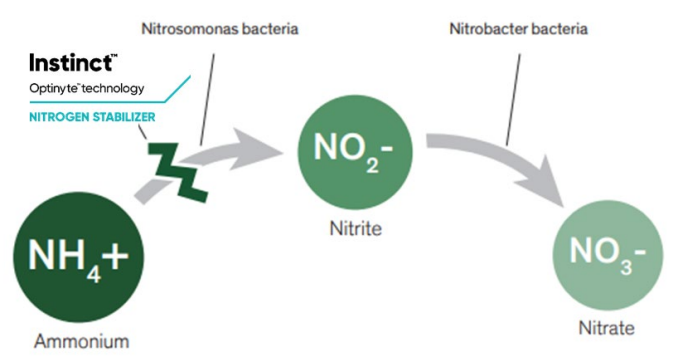
Periodic rainfall coupled with warming temperatures result in the quick conversion of ammonium nitrogen to nitrate, increasing the risk of leaching and denitrification before crops can fully utilise applied fertiliser.
Maize takes up most of its nitrogen later in the season, but fertiliser is often applied early. Instinct helps bridge that gap by keeping nitrogen in the soil for longer. This reduces losses and supports uptake when maize demand is highest.
Instinct works by slowing the conversion of ammonium to nitrate for around 10–12 weeks, helping retain nitrogen in the ammonium form where it is less prone to loss and more available in the root zone for crop uptake.
This is particularly beneficial:
- Where early nitrogen has been applied ahead of peak crop demand.
- On light or free‑draining soils.
- During unsettled spring weather.
By improving nitrogen availability through key growth stages, Instinct supports stronger nitrogen use efficiency (NUE) and helps protect yield where nitrogen losses would otherwise limit uptake.
Instinct offers a practical way to lock in applied nitrogen, supporting productivity and responsible nutrient management through the late spring period.
|
|
Click here to watch Joe Martin, Field Technical Manager at Corteva Agriscience™ UK, explain why Instinct is a key nitrogen management tool to use this spring.
|
|
|
Post-emergence weed control with Titus
and looking ahead to the late blight programme
Early-season weed control focus:
With planting finished early and accumulated day degrees remaining relatively low, attention now turns to weed control strategies that can flex with variable conditions.
In some areas, dry conditions mean soils would benefit from rainfall to help break down cloddy seedbeds. However, this has done little to slow progress.
An early end to planting also creates valuable time to address grading-line dumps and any remaining overwintered potato volunteers ahead of crop emergence and the start of the disease management programme.
Why Titus® matters this season:
Dry seedbeds and limited soil moisture are setting the tone for weed control in spring 2026. Under these conditions, reliance on residual herbicides alone becomes increasingly risky.
Residual performance is closely tied to moisture availability. Extended dry spells reduce effectiveness, while dry ridges are more prone to cracking and slippage. This disrupts the herbicide seal on the ridge, allowing light penetration and encouraging weed germination from both depth and the soil surface. The result is often strong, successive flushes once rainfall or irrigation occurs.
This is where Titus plus an adjuvant becomes pivotal. With an increased likelihood of later and multiple weed-emergence events, effective post‑emergence control will be critical this season, positioning Titus as the core component of many potato weed control programmes.
Using Titus to regain control:
Titus provides flexibility and reliability when conditions make residual programmes less predictable.
Application guidance highlights:
- Apply from crop rosette stage up to 25cm crop height (up to 15cm when used with metribuzin).
- Best results are achieved when targeting weeds at the cotyledon to four‑leaf stage.
- Controls a wide spectrum of broad‑leaved weeds, with valuable activity on a number of grassweeds.
- Tank mix with metribuzin, where varietal tolerance allows, to broaden the weed spectrum and strengthen overall control.
Start thinking about blight programmes:
Looking ahead to the blight programme, timely completion of planting provides an opportunity to minimise early disease pressure by addressing potential inoculum sources. Particular focus should be given to potato dumps and cull piles from grading operations, as uncontrolled growth can act as an early source of infection. Where present, shoots should be destroyed or heaps safely covered to reduce blight risk.
Blight programmes should be initiated from rosette stage ahead of crops meeting in the row; this supports effective stem protection before dense canopy development and reduces the risk of plant‑to‑plant spread. Early-season sprays are essential for getting the blight programme off to the right start.
Using a non-OSBPI curative active as a mixing partner in the first 1-3 sprays such as Option® (containing cymoxanil), is an excellent strategy considering its many key benefits:
- Cymoxanil has been a vital tool in the late blight fungicide armoury for many years, with no documented development of fungicide resistance.
- Cymoxanil (FRAC Group 27) in Option provides a unique mode of action, for use in mix as part of an anti-resistance strategy.
- Option is permitted for up to eight applications across the late blight programme, with a one-day harvest interval, making it an ideal partner for preventative or single-AI fungicides.
All stakeholders are strongly encouraged to adhere to the Best Practice Guidelines from Corteva Agriscience, FRAG-UK Ltd and other manufacturers, which have served the sector well in recent seasons. Visit the Corteva stewardship hub for updated guidance and to view the full technical information.
|

|
|
|
Our 2026 Pioneer hybrid winter oilseed rape
guide is available now
The latest Pioneer® Hybrid WOSR Guide brings together our full 2026 range, designed to deliver strong yield, oil content and disease protection.
It features PT303 Protector® Sclerotinia, the first UK hybrid with a claim for Sclerotinia tolerance, alongside Verticillium Stem Stripe partial resistance, TuYV resistance, and strong light leaf spot and stem canker scores.
The guide also includes PT312, combining Protector Sclerotinia tolerance, pod shatter tolerance and very high oil content; PT315, offering pod shatter resistance, high vigour and high oil; and NEW for 2026, PT322, delivering top level oil content with strong stem canker resistance alongside Protector Sclerotinia tolerance.
|

|
Click here to view the digital 2026 Pioneer Hybrid WOSR Guide and explore the full range.
|
|
|
News and views from the Corteva Team
Vylor™:
Corteva Agriscience™ has announced the introduction of Vylor, the future home of its seeds and genetics business. Watch the video to find out more.
|

|
Vylor’s innovation engine launches later this year with the industry’s most elite germplasm and transformative biotechnology - including a world-class pipeline with gamechangers like proprietary hybrid wheat, leadership in gene editing, multi-disease resistance corn and next-generation biofuels.
|
GRASS 2026:
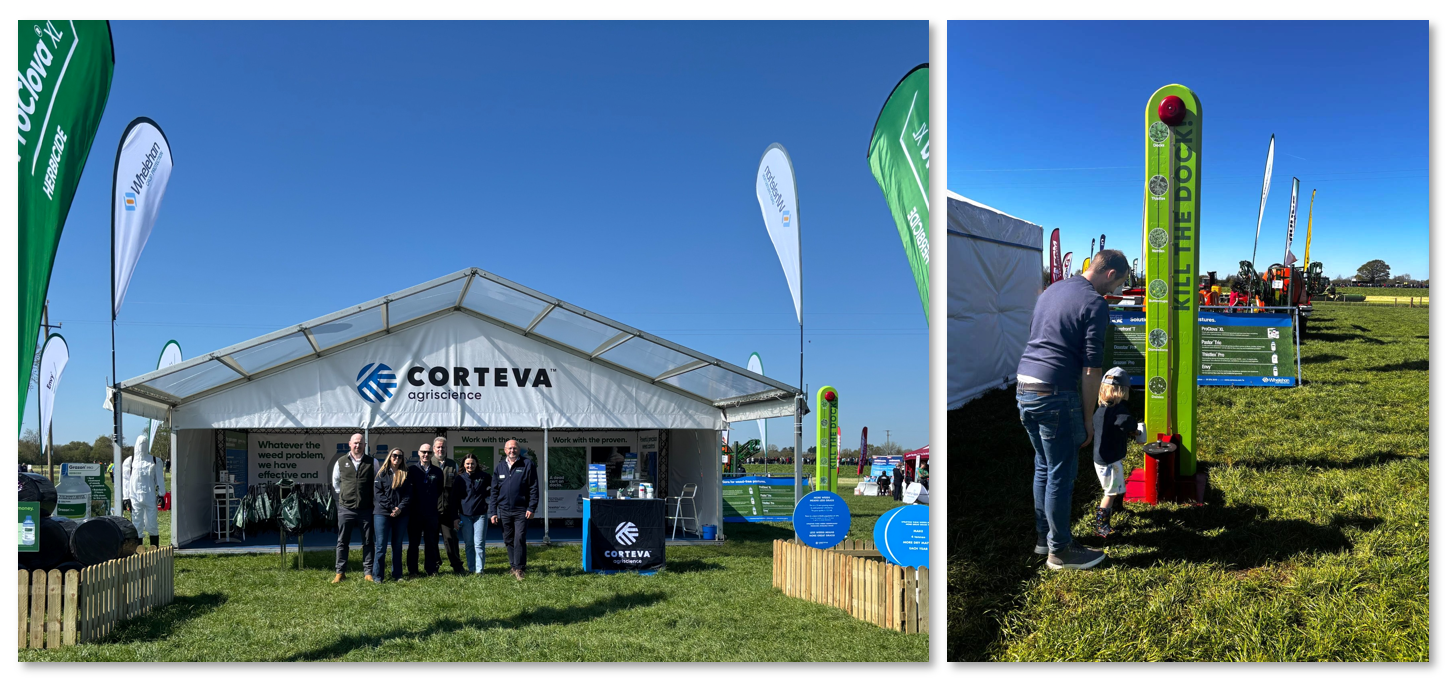
Thanks to everyone who stopped by our stand at GRASS 2026. It was great to chat about grassland weed control, showcase new solutions, and see so many of you step up to the 'Kill the Dock' challenge.
|
|
Cereals Event 2026 - crops, innovation and the future of farming:
At the April Cereals Event crop plot day, Alex Nichols, Marketing Manager at Corteva Agriscience UK, shared his views on crop performance, innovation and the future of farming. From oilseed rape recovery and arable economics to what Corteva will be showcasing at Cereals, Alex explains why continued investment in crop protection and innovation remains critical for farmers.
|

|
Corteva Crop Focus - April 2026:
Looking for practical arable insights this spring? Watch our April Arable Crop Focus with Corteva's Technical Manager, Sally Harris, sharing timely, field-ready thinking for the season ahead. Watch the video to learn more.
|
|
|
|
|
|
Want to hear more from us?
Update your preferences and tailor your choices to make sure you receive the communications that are right for you. Don't forget to enter into our monthly prize draw by ticking the box before submitting to be in with the chance to win!
You can also stay in the loop with all the latest updates by following @CortevaIE on X and Facebook.
|
|
|
Ways to stay in touch
Area Manager and National Technical Manager: Liz Glynn, 00353 (86) 844 5306. Visit our website www.corteva.com/ie for product information, labels and advice.
Our hotline team are also on hand to answer any queries or concerns you have.
|
10 IASIS points will be awarded to those subscribing to this Agronomy Update.
|
USE PLANT PROTECTION PRODUCTS SAFELY. Always read the label and product information before use. For further information including warning phrases and symbols refer to label. ®, ™ Trademarks of Corteva Agriscience and its affiliated companies. All other brand names are trademarks of other manufacturers for which proprietary rights may exist. All manufacturers tradenames and trademarks are duly acknowledged. © 2026 Corteva. Questar™ contains fenpicoxamid. Pixxaro® EC contains fluroxypyr and halauxifen-methyl (Arylex™ active). BlueN™ contains Methylobacterium symbioticum. Instinct® contains nitrapyrin. Titus® contains rimsulfuron. Option® contains cymoxanil. | | | | |